
How Many Coaching Hours Do You Need for ACC, PCC, and MCC?

How Many Coaching Hours Do You Need for ACC, PCC, and MCC?
A coach we know spent eighteen months building her practice before applying for her ACC. She had logged over 120 hours. She was confident, prepared, and genuinely good at her work. Then she got to the application — and discovered that roughly 40 of those hours didn't count because they were logged before her formal coach-specific training began and because her pro bono hours had quietly crept past ICF's allowed threshold.
Several early clients had never been in a formal coaching agreement. A handful of pro bono relationships had gone on for months without being converted to paid engagements. A cluster of sessions came from a season when she was "trying on" coaching before she had actually started her training program. She still earned her credential. But she had to go back out and coach more hours first, which pushed her timeline by several months.
The ICF publishes the hour requirements clearly. They are not hiding them. What they don't publish is a guide to all the ways coaches miscount — and we've seen enough of those situations to know that the number on the page and the number in your log are not always the same thing.
This post covers both.
The Basic Requirements at Each Level
Here's where ICF currently stands as of 2025 and into 2026.
ACC
- 60 training hours (ICF-accredited)
- 100 experience hours
- 75 must be paid (up to 25 pro bono)
- ≥ 8 different coaching clients
- ≥ 25 hours completed within 18 months before application
- 10 hours mentor coaching (min. 3 months, ≥ 3 hours 1:1)
- ICF Credentialing Exam
- Performance evaluation
PCC
- 125 training hours (ICF-accredited)
- 500 experience hours
- 450 must be paid (up to 50 pro bono)
- ≥ 25 different coaching clients
- ≥ 50 hours completed within 18 months before application
- 10 hours mentor coaching (min. 3 months, ≥ 3 hours 1:1)
- ICF Credentialing Exam (required even if taken at ACC)
- Performance evaluation
MCC
- 200 training hours (ICF-accredited)
- 2,500 experience hours
- 2,250 must be paid (up to 250 pro bono)
- ≥ 35 different coaching clients
- PCC credential required (current or previously held)
- 10 hours mentor coaching with an active MCC (min. 3 months, ≥ 3 hours 1:1)
- ICF Credentialing Exam
- Performance evaluation
Those are the current requirements. But the numbers alone don't tell you the whole story.
What "Counts" as a Coaching Hour
This is where things get more complicated than most people expect. A coaching hour, for ICF purposes, is a session in which you are functioning as the coach — not co-facilitating a workshop, not doing a consulting project, not mentoring someone through a business problem. Coaching — where your client holds the agenda, and you are holding the space and asking the questions.
Key Rules to Know
- Group and team coaching count — with limits. No more than 25% of your required hours can come from group or team coaching.
- Internal coaching counts, with caveats. ICF has specific guidance on what constitutes a real coaching relationship in an internal context.
- Most hours need to be paid. At ACC: 75 of 100 must be paid (up to 25 pro bono). At PCC: 450 of 500 (up to 50 pro bono). At MCC: 2,250 of 2,500 (up to 250 pro bono).
- You must meet minimum client and recency requirements. At ACC you need at least 8 different clients with at least 25 hours in the 18 months before you apply; at PCC at least 25 clients and 50 recent hours; at MCC at least 35 clients across your 2,500 hours.
Pro bono coaching counts, and it matters — but it cannot be the backbone of your application. If you have been building your hours primarily through free sessions, this is worth knowing now rather than at the application stage.
When Does the Clock Start?
Do coaching hours from before your training program count? The short answer is yes, sometimes — but it depends on when you started and at what level you're applying.
| Credential Level | Pre-Training Hours Eligible? | Key Requirement |
|---|---|---|
| ACC | No | Hours must begin after coach-specific training started |
| PCC | Conditionally | All hours must be after the start of your first coach-specific training, with a formal coaching agreement documented |
| MCC | Conditionally | All hours must be after the start of your first coach-specific training, with a formal coaching agreement documented |
The documentation requirement is real. ICF asks you to log your hours and be prepared to verify them. If you're coaching without tracking, start tracking now.
Hours Roll Forward — and That's Worth Understanding
One thing that helps as you plan your path: the hours you accumulate for your ACC count toward your PCC. The hours you accumulate for your PCC count toward your MCC. You are not starting from zero at each level.
So if you finish your ACC application with 140 coaching hours — 40 more than the requirement — those 40 hours carry forward. When you apply for PCC, you need 500 total, and you already have 140 on record.
The coaches we see who move through the credential levels most smoothly are the ones who treated client development as ongoing — not as something they did intensively right before an application.
Training Hours vs. Experience Hours: Not the Same Thing
- Training hours come from inside a coach training program — learning, practicing under supervision, receiving feedback. These come from your school.
- Experience hours come from actually coaching clients. These come from your practice.
You need both. At the ACC level, you need at minimum 60 training hours and 100 experience hours — two separate buckets, and you need to fill both.
Mentor Coaching: How It Really Works
Mentor coaching is its own requirement at every level — and it has more structure than many coaches realize.
- You need 10 hours total of mentor coaching for each credential application, focused on your coaching against the ICF Core Competencies.
- Those 10 hours must be spread over at least 3 months, not compressed into a weekend or a single intensive.
- At least 3 of the 10 hours must be one-on-one (individual) sessions with your mentor coach; the rest may be in a group format.
- For MCC applications, your mentor coach must hold an active MCC credential — a PCC mentor is not sufficient at that level.
- You cannot reuse mentor coaching hours from a previous credential application for the next level. Each application (ACC, PCC, MCC) requires its own distinct set of 10 mentor coaching hours.
In practice, this means planning your mentor coaching alongside your training and client work — not treating it as an afterthought you can retroactively apply in multiple directions.
The ICF Credentialing Exam
All three credentials — ACC, PCC, and MCC — require you to pass the ICF Credentialing Exam, an online assessment that evaluates your understanding of the ICF Core Competencies, Code of Ethics, and the ICF Definition of Coaching.
- The exam currently includes 81 items based on realistic coaching scenarios.
- Every new credential level requires the exam. If you took and passed it for your ACC, you will still need to sit for it again as part of your PCC application.
- MCC applicants must also have a current passing result on the ICF Credentialing Exam as part of their application package.
We see this as good news: the exam is designed to reinforce how you think as a coach, not just what you remember from training.
The Performance Evaluation Changed Things
Every Level 1 program is now required to include a performance evaluation. That means your coach training is not complete — and your hours alone are not sufficient — until you have been assessed against the ICF's current Minimum Skills Requirements in a live or recorded coaching session.
The standards being used in that evaluation were updated in October 2025, and those updated Minimum Skills Requirements apply to ACC and MCC applications from January 1, 2026 onward. If you're in a program that trained faculty years ago and hasn't stayed current with what ICF is actually assessing today, that gap shows up in the evaluation.
The credential is a performance credential — not just a documentation exercise. The hours matter. And what you do with those hours matters more.
The MCC Path: Why PCC Is Non-Negotiable
One of the most important structural realities in ICF credentialing is this: there is no direct path to MCC. Unlike PCC, which you can apply for without ever holding an ACC, the MCC credential has a firm prerequisite.
- You must currently hold, or previously have held, the PCC credential in order to apply for MCC.
- Your 2,500 experience hours must meet all the usual criteria (paid vs. pro bono, client diversity, timing after the start of your first training).
- You must complete 10 hours of mentor coaching with an active MCC coach, spread over at least 3 months with a minimum of 3 hours one-on-one.
- You must submit a performance evaluation recording that meets the updated MCC Minimum Skills Requirements and pass the ICF Credentialing Exam.
When we talk with coaches about long-term planning, we encourage them to think in arcs: ACC as your entry into professional practice, PCC as your consolidation and deepening, and MCC as a reflection of sustained, masterful coaching — built on a PCC foundation, not around it.
A Note on Where We Stand
At Catalyst Coach Academy, Jamie and Ruthie are both actively coaching clients, mentoring coaches, and engaged in ICF credentialing work right now. When we teach what gets assessed at the ACC level, it is coming from sessions that happened last week.
We are working through the ICF accreditation process and will tell you exactly where we stand if you ask. What we can say is that every hour you spend in our program is designed to prepare you for what actually happens when you sit across from a real client — and for the very real, very current standards ICF is using in performance evaluations and the Credentialing Exam.
The Honest Bottom Line
Getting to your ACC credential takes at minimum 60 training hours and 100 experience hours, with 75 needing to be paid, at least 8 different clients, and at least 25 of those hours completed in the 18 months before you apply. The PCC takes 125 training hours and 500 experience hours, with 450 paid, at least 25 different clients, and at least 50 recent hours. The MCC takes 200 training hours and 2,500 experience hours, with 2,250 paid, at least 35 different clients — and it requires that you have already earned (or previously held) your PCC.
Across all three levels, you will also need 10 hours of mentor coaching that meet ICF's structure requirements, a passing performance evaluation against the current Minimum Skills Requirements, and a passing result on the ICF Credentialing Exam.
But the coaches who get there — and who feel confident when they do — aren't the ones who were chasing the minimum. They're the ones who were genuinely coaching, building real relationships with real clients, learning from every session, and working with training and mentorship that kept pushing them forward.
The number is the threshold. The practice is the point.
Ready to Map Out Your Path to Credentialing?
If you're sorting through what the ACC, PCC, or MCC journey looks like for you, we're happy to talk it through honestly — no pressure, just a real conversation.
Schedule a Call with Jamie & Ruthie →Nashville, Tennessee · Cohorts enrolling now
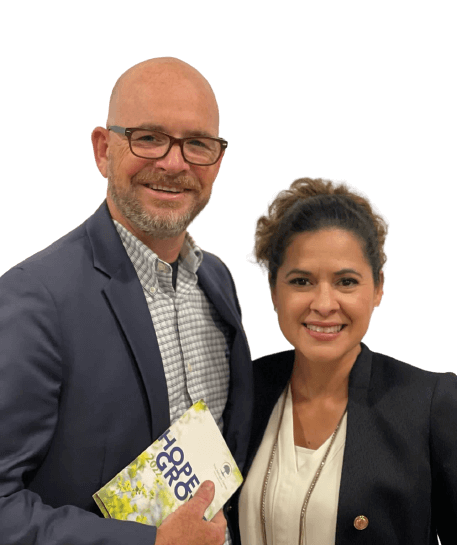
Jamie & Ruthie Slingerland, MCC
Jamie and Ruthie Slingerland are Master Certified Coaches (MCC) and co-founders of Catalyst Coach Academy, based in Nashville, Tennessee. With a combined 10,500+ coaching hours, they train coaches to develop the skill, presence, and confidence to earn their ICF credential and build a practice they're proud of.
